


WASTE
TO
ENERGY

As part of our commitment to integrating environmental and economic constraints into the development of new energy solutions, we explore every avenue alongside our core research programs.
This approach led us, three years ago, to investigate waste from certain metallurgical industries—specifically aluminum production. One of our PhD students focused on the potential to valorize these residues, and the findings have been both surprising and highly promising. In fact, a patent based on this research is forthcoming.
This innovation has already attracted key industrial players, interested in the valorization of their aluminium waste via ou innovative hydrometallurgical process.

Hydrogen production
from aluminum dross.


Technological innovation
Novacium's innovation lies in identifying another low-cost and readily available industrial waste product that significantly boosts hydrogen yield. This co-valorization approach offers a dual advantage: it eliminates the need for a highly corrosive environment and considerably accelerates the reaction kinetics.

Novacium’s W2E program has demonstrated that black dross can be transformed into a valuable resource for clean energy production.
I am proud to contribute to the global advancement of waste-to-energy solutions that turn industrial byproducts into green power”
Diego Guerrero
PhD candidate
Chemical Engineer – Universidad Nacional de Colombia
Process Engineer – ENSIC, France
Diego joined our team in 2023 bringing expertise in chemical and engineering.
His unique perspective complements our research on green hydrogen production.
By taking the lead on this waste to energy program, he is guiding us toward unexpected and high potential solutions.
FOCUS ON ALUMINUM
Thanks to its many advantages, aluminum is an essential material in today’s world. Used across industries—from construction to consumer goods—it is lightweight, malleable, corrosion-resistant, and infinitely recyclable without loss of quality. In fact, 75% of the 1.5 billion tons of aluminum ever produced is still in use today. (1) By reducing greenhouse gas emissions by 95% (1) and eliminating dependence on depleting domestic bauxite resources, ADEME estimates that ""Recycling is a key driver for decarbonization and sovereignty". (2) However, a major challenge remains for both industry and the environment: the generation of bulky, often toxic waste that is largely unrecycled.

PRIMARY ALUMINUM
BAUXITE
4 T = 1 T of primary aluminium (1)
70,600,000 tons
15,1 T CO2 / T
mine -to-gate
INDUSTRIAL
BYPRODUCTS

SECONDARY ALUMINUM
RECYCLED ALUMINUM
including primary production scrap
27,500,000 tons
0.52 T CO2/T
cradle-to-gate
INDUSTRIAL
BYPRODUCTS

RED
MUD
182 Mt/year(4)
COMPOSITION (5) :
silicon, iron, aluminum, arsenic, cadmium, mercury,
uranium. PH9
A byproduct of bauxite refining via the Bayer process, highly toxic when in contact with water. Following multiple pollution incidents, discharge at sea has been banned in France since 2015, leading to onshore storage solutions.
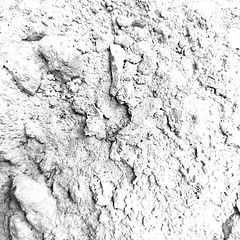

BLACK DROSS
>2.7 Mt/year (6)
COMPOSITION (5) :
Metallic aluminium 0 -30 %
Aluminum oxide 40 -60 %
Salt < 5 % - Other 5- 15 %
A hazardous byproduct—flammable, polluting, and capable of releasing toxic fumes if not properly managed. Regulations for their treatment are increasingly strict and costly for industrial operators.

COMPOSITION (5) :
Metallic aluminum 3 - 10%
Aluminum oxide 30 -50%
Salt 30-50% - Other 5-10%
Classified as a hazardous waste in many jurisdictions due to leachable salts and ammonia emissions.
news.
• Process optimization on the laboratory-scale pilot.
• Patent pending under validation.
• Consortium established with 3 research laboratories and 9 industrial partners, pooling the expertise needed to advance to the finalization phase of the industrial pilot.
January 2026
next.
A funding application has been submitted to the European Commission to secure support for the construction of the semi-industrial pilot plant, with a submission deadline set for the second semester 2026.
Deadline: Second half of 2026
